When I entered the European Store back in 2015, I was summoned there by my wife to buy “salo ,semechki , rye bread, and pickled tomatoes” . I would also buy a few things out of curiosity for fun, for my own edification.
To Americans ever since the Cold War , anything Eastern European is …well, Russian , and everything in movies and tv shows growing up in the 80’s and 90’s was a surly mixture of badly typed casted villains, crude machismo, and vodka drenched maladaptive behavior. With my American bias , shopping in a European store was exploring a new frontier.
So here I was, skulking around looking at all the European groceries I couldn’t read, and noticed a wall of herbal tea products .
Most of them came in small boxes that probably used the same design that it did during the Soviet Union. There wasn’t much information on the box except the reseller sticker that described the contents and grams total. I ended up buying a box of Chaga tea which is fungi , and also grabbed a box of Greek Mountain tea to try. Before this moment , Sideritis was completely unknown to me.
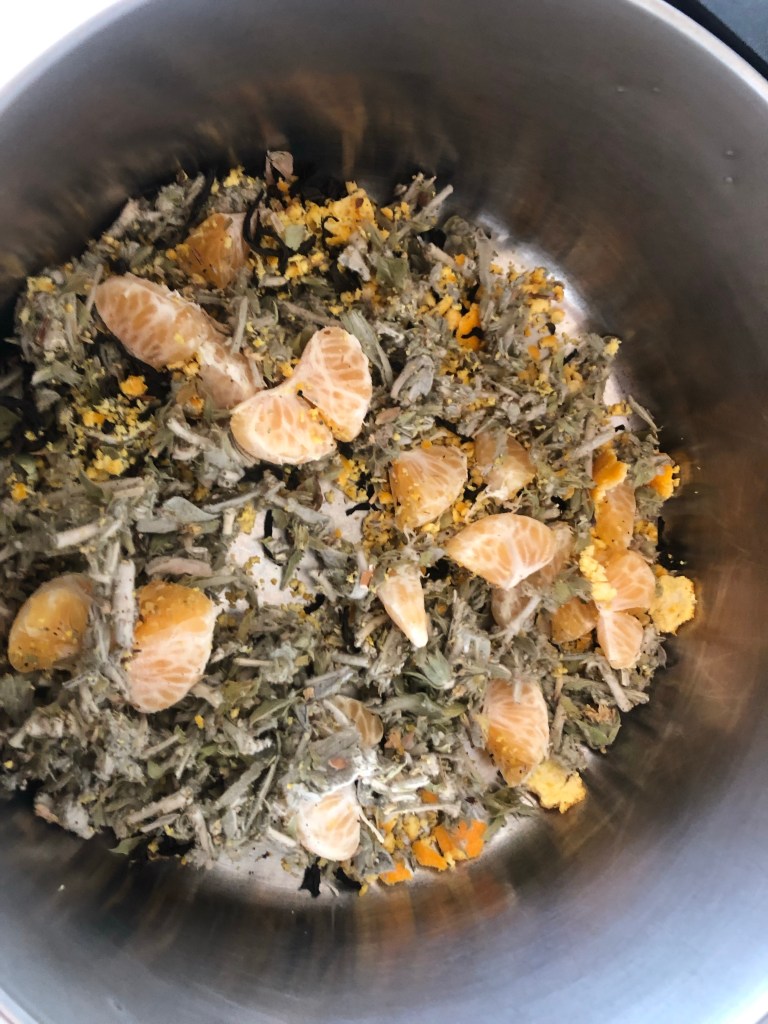
The first time brewing Greek Mountain tea, or “Iron wort” I was surprised by the aroma , because it reminded me of a memory that was not recallable, where my brain detected something familiar, but there was no visual memory to attach to it. The other thing is that it’s the only herbal tea I’ve consumed that has a palpable physical reaction in me aside from caffeine.
I wouldn’t begin to try to define that reaction or feeling , because it isn’t consistent, and seems to differ whether hot or cold when consumed , or with something citrus added during boil , but generally not unpleasant.
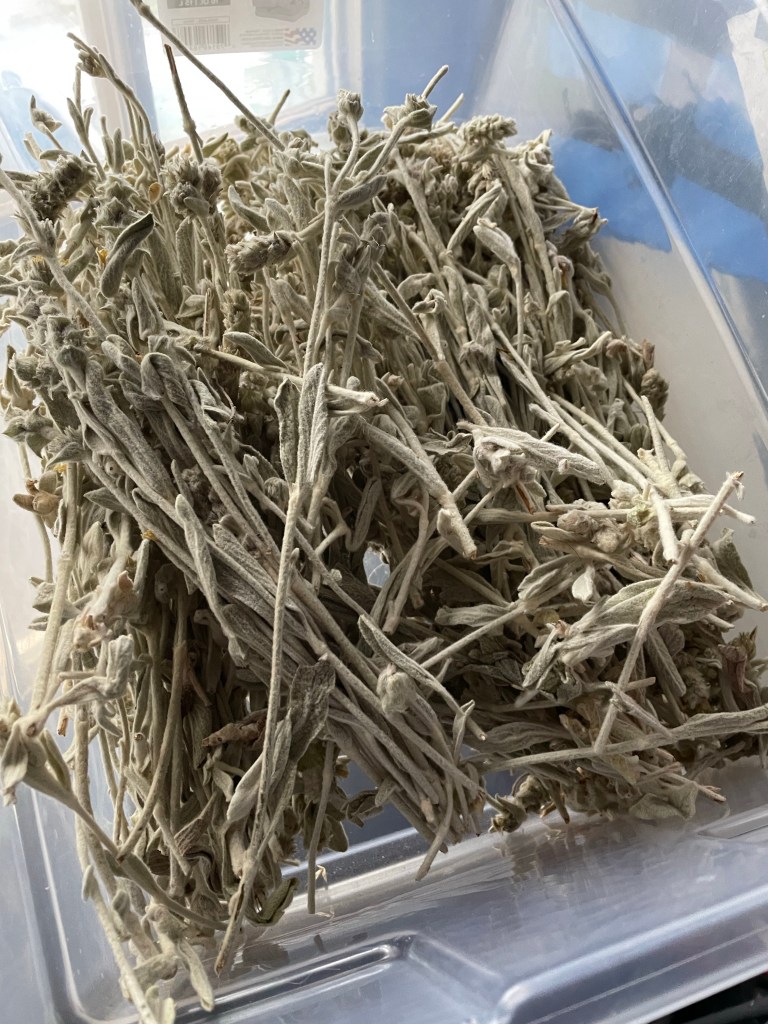
This is what fascinated me, changing different ways to prepare and mixing it with other teas and ingredients to experiment. The aroma is stronger than the taste, so it’s amenable to enhancing the flavor with other additions.
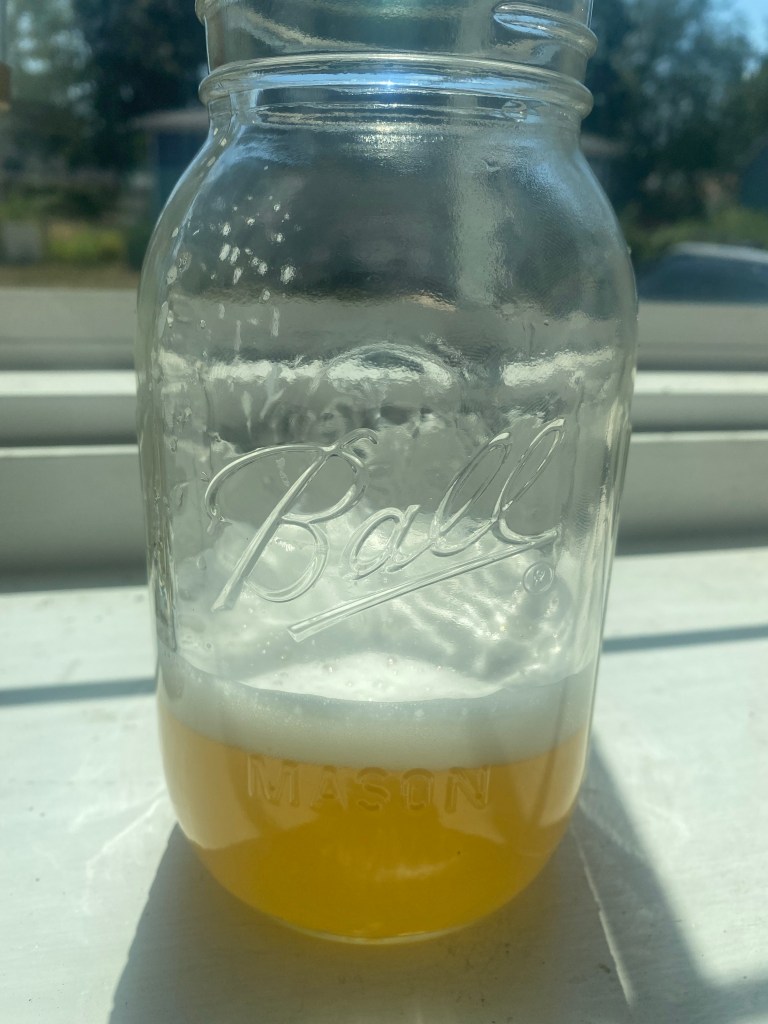
When I started Homebrewing beer, it was naturally my first ingredient I wanted to try, but I put it off because I wanted to avoid the disappointment, and felt it naive and unhelpful to experiment while trying to learn the basics.
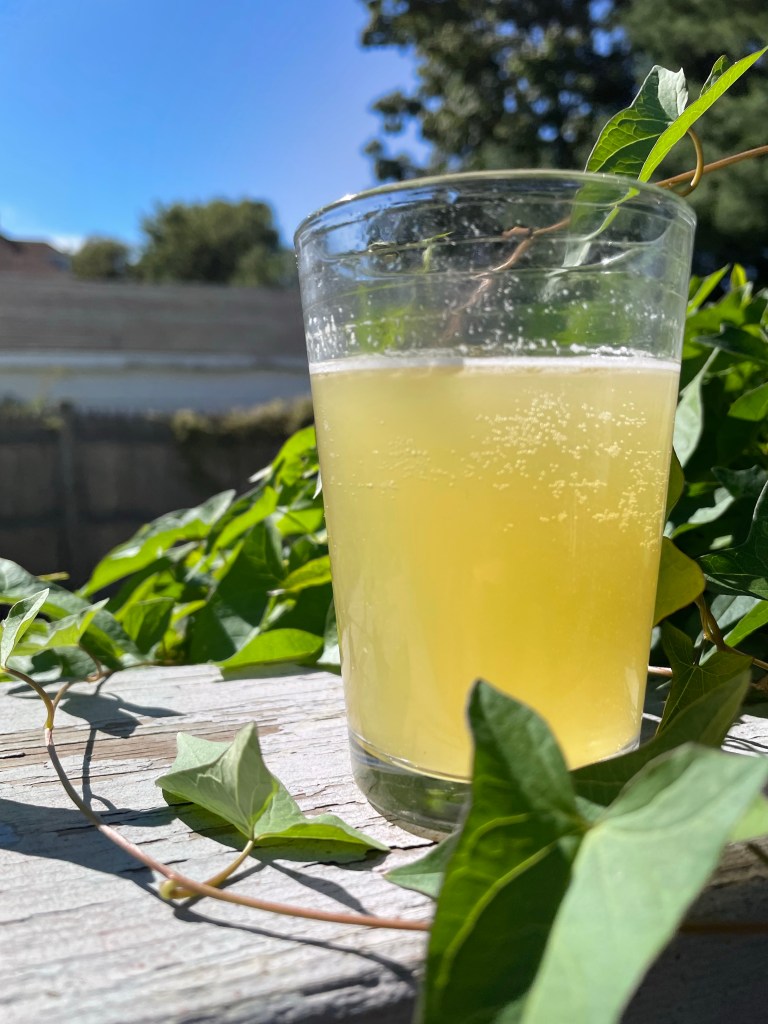
I was interested in gruit beers , but a beer without hops isn’t a beer. So instead of boiling mugwort I chose an an Amarillo hop 60 minute boil, and as a 15 minute boil for the sideritis until flame out
The result was magic , the dull aromatics of the tea was transmuted into a very strong citrus flavor. Not only did the resulting beer have character, but it was unique in its aroma, mouthfeel , taste and aftertaste.
The sideritis herb, creates a crushable citrusy ale that’s in a class of it’s own.
When looking online, there’s a brewery in Greece named Kykao that uses sideritis in one of their beers as an herbal flavor .
It’s tough to see whether anyone can comment on the sideritis aspect of the ingredient of their “herbal saison “, because there’s multiple herbs on top of Sideritis like linden flower, lavender and cinnamon flowers .
https://untappd.com/b/kykao-handcrafted-herbal-saison/2917888
This type of endless experimentation is why I’ll never get bored of home brewing !
 Jenks Brew Club
Leave a comment